

How to Use a Self Propelled Wheelchair
Wheelchairs allow mobility and independence for those who have difficulty walking. It is crucial to learn how to maneuver your chair and to consult with a therapist or occupational doctor to train you in this area.
Wheelies are a popular technique to move a wheelchair. This requires the user to have hands large enough to span these rims and good grip strength to propel them forward.
Seating Position
As the name suggests, a self propelled wheelchair allows you to move around and not rely on others. This is the primary factor that helps many who want to regain their independence or maintaining it. It also reduces the risk of injury to the user of the wheelchair and those in the vicinity.
It is important that the seat position is comfortable for the wheelchair user. To achieve this, there are several ways to go about it. First, ensure that the footplates are in the correct position. Release the footrest catch and then swing them round so that they are in front of the chair. Make sure that the wheelchair user is able to comfortably place their feet on the footplates and there is even pressure under their feet.
It may be necessary to lower the footrest height especially if the person is hemiplegic. The footrests can increase the pressure on the seat bone and cause discomfort and pain if they are too high.
A strap for the forehead can aid the wheelchair user in staying straight, particularly if their neck muscles are weak. They can be fitted to wheelchairs with no headrests by a mobility expert.
If the wheelchair has armrests, it is essential to ensure that they are in the proper position so that the wheelchair user can move without hitting their arms as they move. To ensure this it is recommended to use wheelchairs with removable or swing away armrests. You can also add foam inserts to the back of armrests in order to raise them to an appropriate height.
It is also important that the wheelchair has a properly-fitting cushion, particularly if the person using the wheelchair is at a higher chance of skin breakdown or pressure ulcers. These are because pressure ulcers are caused by friction between the skin and the surfaces of the wheelchair. In some instances the skin may become dry and irritated because of sitting in a single position for long periods of time. This can cause blisters. To decrease the chance of developing pressure ulcers, the chair should be rotated regularly.
Pushing
Self-propelled wheelchairs let users move independently, without the need for someone to push them. They are easier to maneuver due to their larger rear wheels and push handles. This enables them to travel over a wide range of surfaces without worrying about falling or getting stuck on obstacles such as small steps or curbs.
When you are moving forward with your chair, be careful not to hold the handle too tightly. Applying too much pressure can cause your hands to become cramped and reduce the force you can apply. You may also find it beneficial to use a handrim cover or wheelchair gloves with grip material that is built into the palms. This will improve the positioning of your hands and increase the force you use.
Keep the front casters free of debris, such as rocks or sticks. If the casters have been covered with this kind of material, it can make it difficult to move as you would expect from your wheelchair and could lead to an uncontrolled movement and/or potential injury. If the height of your seat to floor is high, you might be thinking about adding extra padding to the front casters.
It is recommended that a caregiver pushes the wheelchair to assist you go up a curb or an easy step. If you'd like to accomplish this on your own, you'll require additional training and experience under the supervision of medical professionals. When doing this, it is essential that you place the wheelchair facing directly towards (perpendicular to) the curb or a small step and then place the front wheels near the edge of the curb.
When you are pushing up a slope, it is essential to have a clear space ahead of you so that you don't cross paths with other people. You'll gain speed quickly in the event that you don't leave enough space in front of you. You could also crash with another person. To avoid this make sure you are aware of those who are around you when you're on a slope. Also, have a caregiver or a friend waiting to catch you in case you start to fall out of your wheelchair.
Braking
A self-propelled chair requires the user to perform the braking and guiding actions in a particular way to ensure the chair is safe to use. This is particularly crucial when the chair is situated on a slope as the centre of gravity can move forward if brakes are not performed in a controlled manner.
Always ensure that your hand is in the correct position when you push the wheelchair. Ideally you should position it at 10 hours (10:00) on the wheel. Release the hand around 2 o'clock (2:00). This ensures that the bulk of the body weight is over the rear wheels, allowing for the smoothest, easiest push. It also helps maintain the integrity of the shoulder, elbow and wrist joints.
To turn all terrain self propelled wheelchair with a wheelchair to turn left, push forward on the right-hand side of the rim and pull the left-hand rim back. This will cause the wheelchair to turn left and allows you to remain seated in your chair. Wheelchairs also come with anti-tip bars to stop them from tipping backwards.
Always consult the user guide that comes with your wheelchair to confirm the maximum safe slope that your chair is able to traverse. In certain circumstances, the wheelchair might need to be temporarily removed and operated by hand to get over steep gradients. If this is the case, it is recommended that you seek the assistance of an individual or a relative and follow the instructions in the User Guide.
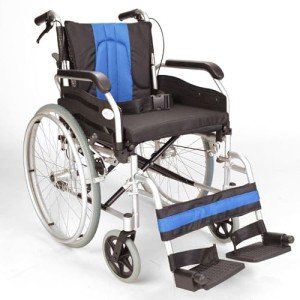
When you are negotiating kerb stones, it is recommended that you remove and mount your vehicle using ramps as often as you can. This will reduce the pressure that is required on the rear and front tyres and allow you to move over the kerb at a faster speed. Many manual wheelchairs feature a kerb-climber option which can aid in this process. It boosts the capacity of the wheelchair to climb by around 10cm (4")
To stop a wheelchair you need to release the brakes gently and then push the joystick toward you. This will de-clutch motor. The wheelchair will then come to a stop, enabling you to remove the footrests, put in walking aids, and then safely exit the chair.
Steering
When using a self propelled wheelchair the user is accountable for controlling and steering. This can be done in different ways depending on the structure of the chair and any accessories such as armrests or phone or drink holders. Wheelchairs vary in design as well as in size and weight. The size of the front casters on a wheelchair will determine the terrain it can handle. Small casters enable wheelchairs to move faster, but they struggle on rough surfaces such as grass or cobblestone. Large casters can let a wheelchair travel over rough surfaces, but it isn't as fast.
The user of a wheelchair must use both hands on smooth, flat surfaces to maintain momentum. This is accomplished by grabbing the hand rims and pushing with a uniform hand. Hands should not be tucked tightly around the hand rims since this can cause injury and lead to over-corrections when the chair makes around. It is also advised that the wheelchair user test leaning forward and backwards to different degrees to find the optimum balance between lean and control.
For more difficult or difficult terrain, the wheelchair user should plan ahead and anticipate obstacles. The wheelchair user must be aware of their shoulders and avoid running into objects or other people. If they travel with a caregiver, they should be ready to assist if they need to. If the wheelchair is placed on a slope, a caregiver must assist or drive it until the user is comfortable with this.
To turn the wheelchair, the user pulls one hand rim back while pushing the other forwards. The user of a wheelchair should practice this on a smooth, level ground before trying it on a different surface as the movement may be uncomfortable and the chair may easily fall over if the motion is not properly mastered. If the wheelchair is equipped with power wheels, this could reduce some of the pressure off the user and make turning much easier. It is also helpful to be aware that good-hearted but untrained strangers often try to push a person in the wheelchair against their will, therefore the user of the wheelchair should make sure that their handle handles fold down or cover them with handles covers.